
Back to
SivaMahadeva's


 Nageshwar
is regarded as one of the 12 Jyotirlinga Shrines of Shiva. It is
located on the route between Dwarka and the Bet Dwarka island, on the
coast of Saurashtra in Gujarat. The Rudra Samhita sloka refers to
Nageshwar with the phrase 'Daarukaavane Naagesham'. This Jyotirlinga
manifestation is worshipped as Nageswara, at this shrine on the way to
Bet Dwarka from Dwarka. Two other sites in India, one near Audhgram
near Purna in Andhra Pradesh and another near Almora in Uttar Pradesh
also enshrine temples to Nageswara Jyotirlingam.
Legend
has it that once while rowing a boat, a devotee by the name of
Supriya, was attacked by a demon Daaruka, and imprisoned him along with
several others at his capital Daarukaavana, where he resided with his
wife Daaruki. Once again, Lord Shiva appeared in the form of a
Jyotirlingam and vanquished the demon with the Paasupata Astram. Two
other sites in India, one near Audhgram near Purna in Andhra Pradesh
and another near Almora in Uttar Pradesh also enshrine temples to
Nageswara Jyotirlingam.

Pandavas
came here during their Vanvas (life in forests) build a hermitage for
themselves. Their cows used to go to the same river bank to drink
water. After drinking wate, milk used to automatically flow into the
river as if the cows were offering to the river. One day Bhima saw this
miraculous event. He promptly told Dharmaraja about the same. Then
Dharmaraja said, “Surely, some great God must be living in this river”.
Then the Pandavas started removing the water from te river. The middle
part of the river was so hot that the water there was boiling. Bheema
lifted his mace attacked the river thrice. The water gave way
instantly. At the very moment , instead, blood started oozing like a
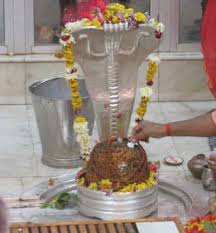
spring. Lord Shankara’s Linga could be seen as the JyotirLinga.


On
the west coast in an area of 16 Yojanas Daruka and Daruk need to live.
The hermits were tired of being harassed by Daruk, and others. So they
went and sought refuge with Orvamuni, who in turn cursed the Demons
that they would be destroyed. The Devas launched an attack on the
Demons. Now, the Demons began to worry. Daruka, who received some
special boons from Parvati, lifted the entire forest, took it away on
the path of the sky and put it in the middle of the sea. Only then, did
the Demons relax and continue to live there. They used to go by boats
and capture the hermits and imprison them the island. Once, there was a
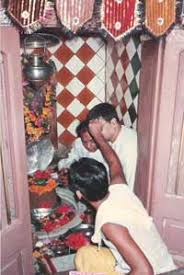
Shiva devotee by the name Supriya who was among the prisoners. He
never ate food or drank water without worshipping Shiva. He continued
to do Puja even while in prison.
When
the guards informed their chief about his, he ordered that Supriya be
put to death. Then Supriya prayed to Lord Shankara for his life. The
Lord appeared before him immediately and destroyed the entire group of
demons including their families. The Lord laid open the entire island
for all the four classes of people for living. On the other land,
Parvati here granted a boon to Daruka. As a result, at the end of that
era, only Demons would be created and she would rule Daruka. Lord Shiva
accepted this. Then Shiva and Parvati stayed there. Shiva once again
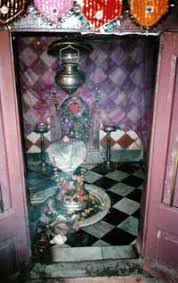
assumed the form of JyotirLinga, with the name Nageshwar and Parvati was
known as Nageshwari.

The
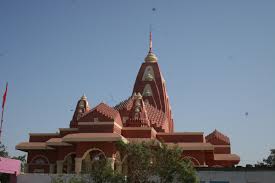
architectural beauty of the Nagesh Temple is simply exquisite. This
temple built with stones during the Pandava period is strong. The four
walls of the temple are very strong and the corridors are large. The
court hall is supported by eight pillars. It is oval shaped. Both this
and the Nagesha Lingamurthy is located in the small internal
Garbhagriha. Here, there is no Nandi idol in front of Mahadeva. There
is separate Nandikeshwara temple back of the main temple. On all the
four sides of the main temple, smaller temples for the twelve
JyotirLingas are constructed. Apart from these, VedavyasaLinga,
bhandareshwar, Nilakanteshwar, Ganapati, Dattatreya, Muralimanohar,
Dasavatar temple and idols etc., are there. In all, there are 108 Shiva
temples and 68 shrines are located here.


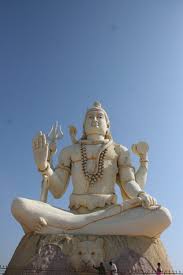

The
structure of the Naganath temple is very beautiful. Inside it, there
is another shrine called Runamochan teerth. Both these shrines are
called “Mother-in-law- Daughter-in-law” shrines. Every 12 years, at the
time of Kapila Shashti, kashi Ganga offering as “Padarpan” is
performed. During this the water in the teerth kund looks crystal
clear. Again at a specific time it becomes ‘Shivala Yukt”. Close to the
Naganath temple, there are several statues of various divines. Besides
these there are many more idols of animals, soldiers relating some
stories. These stones idols are very beautiful to look at. At a huge
corner, there is an idol of Paravti, who is sulking with Shiva trying
to pacify her. This statue is amazing to look at with its stunning
features. It is unmatched in its expression of emotions.
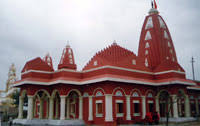

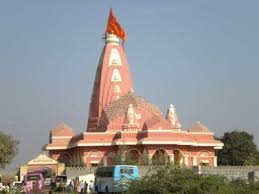
Aurangazeb
was intolerant towards other religions and wanted to destroy this
Hindu temple. When he tried, thousands of bees came out of the temple
and attacked Aurangazeb and his army. He left the demolition work
midway and went away. The devotees rebuild the broken temple. Sometimes
snakes with their hoods open can be seen standing guard on the
Naganath Linga idol. When they drink the milk left in cups for them, is
never known.
Sri Nageshwar -Dwarka-Gujarat.,Nageswar-More-Images-Sites
Back to
SivaMahadeva's

nice post! can you also please provide vaidyanatha ashtakam which will be chanted for Lord Shiva during the Shiva Ratri.
ReplyDelete